Australia’s Job Market Has a Bigger Problem Than AI And Almost No One Is Talking About It
AI. Automation. Slowing hiring.
If you’ve read anything about Australia’s job market lately, you’ve heard the same themes repeated again and again.
They matter, but they’re not the real story.
Beneath the headlines, Australia is undergoing a quiet but profound shift in how people relate to work itself. It’s not showing up clearly in unemployment figures or vacancy data, yet it may be the most important employment trend of 2025 to 2026.
Australia doesn’t just have a jobs problem.
It has a work engagement and skills alignment problem, and it’s reshaping careers, productivity, and workforce stability in ways few articles are exploring.

AI isn’t replacing jobs in Australia yet, but it is revealing which roles are fragile or underutilised.
The Job Market Looks “Fine” But Something Feels Off
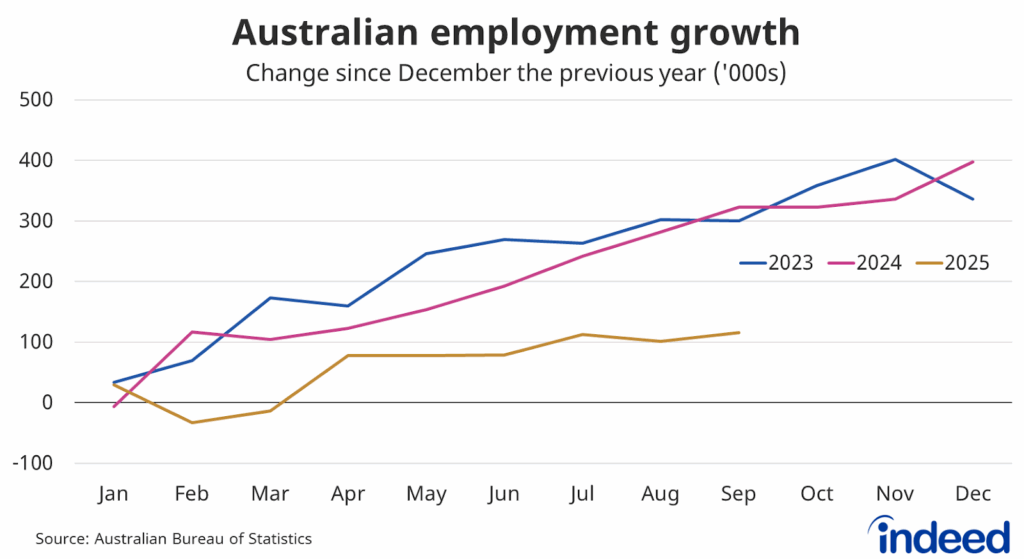
On paper, Australia’s labour market still appears resilient.
Employment remains near record highs.
Unemployment sits around the mid 4 percent range.
Participation remains strong by historical standards.
Yet ask employers, employees, or recruiters the same question.
“How does the market actually feel?”
The answer is consistent. Flat. Cautious. Disconnected.
Hiring is slower. Retention is harder. Productivity is weak.
And many workers feel stuck, not unemployed, but not fulfilled either.
The reason is simple. Traditional labour statistics are measuring activity, not experience.
The Metric Australia Barely Talks About Engagement
One of the most under reported findings in recent workforce research is this.
Only around 16 percent of Australian workers describe themselves as fully engaged at work.
That means most workers feel disconnected from their role, do not see clear progression, and are not emotionally invested in where they work.
Engagement drops even further among hybrid and remote workers, despite flexibility becoming a permanent feature of Australian employment.
This matters because engagement is not a soft issue.
It is one of the strongest predictors of productivity, innovation, and retention, areas where Australia is already under pressure.
In other words, people still have jobs, but the jobs are not working as well as they used to.
Why Disengagement Is More Dangerous Than Unemployment
Unemployment is visible. Disengagement is invisible.
A disengaged workforce produces less value per hour, changes jobs more frequently, learns fewer new skills, and contributes less to organisational momentum.
This helps explain a paradox many businesses are facing.
Why can’t we find the right people when so many people are employed?
The answer is not a lack of workers. It is a lack of alignment between roles, skills, and motivation.
The Real Shift From Job Titles to Skills Identity
Another trend quietly reshaping the job market is the decline of the traditional job title as the centre of a career.
More employers now hire for capability, adaptability, and transferable skills.
Less for linear experience and static role definitions.
At the same time, most Australian workers believe the skills required in their job will change significantly within the next five years.
This creates a new divide in the labour market.
Workers who understand, update, and communicate their skills gain mobility.
Workers tied to outdated role definitions face stagnation, even while employed.
Yet most career advice still focuses on applying for roles, not translating skills into future ready opportunities.
AI Isn’t Replacing Jobs It’s Exposing Fragile Ones
AI dominates headlines, but its real short term impact in Australia is not mass job loss.
It is exposure.
AI tools are already highlighting inefficiencies, rewarding adaptable workers, and accelerating skill gaps.
Many employees are using AI informally to cope with workload or improve output, while employers struggle to keep pace with governance, training, and culture.
The result is not transformation.
It is tension between capability and structure, speed and caution, autonomy and control.
And tension accelerates disengagement.
The Rise of the Agency Economy
One of the clearest signals of this shift is how Australians now define a good job.
Increasingly, workers prioritise control over time, flexibility and autonomy, skills growth over titles, and purpose over permanence.
This does not mean Australians do not value security.
It means they value agency, the ability to adapt, move, and remain employable as the market changes.
Traditional employment models struggle to provide that, which is why dissatisfaction can rise even when wages improve.
What This Means for Australia’s Job Market in 2026
The biggest risk facing the Australian workforce is not automation or unemployment.
It is this.
A growing number of people who are technically employed, but psychologically disengaged and strategically misaligned.
That workforce does not innovate.
It does not reskill fast enough.
And it does not sustain long term economic growth.
A Quiet Advantage for Those Who Act Early
The individuals and organisations that thrive over the next few years will be those who focus on skills visibility, continuous capability development, engagement not just employment, and mobility rather than rigidity.
From our perspective at Careeraide, this shift is already visible. Increasingly, the most successful outcomes for both individuals and employers come from thoughtful redeployment, skills based transitions, and roles that genuinely align with capability and purpose, not just job titles.
The future of work in Australia will not be defined by how many jobs exist, but by how well people are matched to them.
And that story is only just beginning.
Data Sources and References
Australian Bureau of Statistics, Labour Force Australia
Jobs and Skills Australia labour market updates and skills gap reports
ADP Research Institute, People at Work 2025 Australia
Gartner HR Survey on workplace culture and engagement
Deloitte Access Economics employment and productivity commentary
Roy Morgan work from home and employment trends
Industry hiring and workforce reports from Hays, Indeed Hiring Lab, and Employment Hero